Dental prophylaxis and treatment of the youngest patients is sometimes demanding, but there is no doubt that it is particularly important. Already at this stage of the child’s life, care should be taken to develop proper habits and care for general oral hygiene, especially since certain ailments of deciduous teeth are easily transferred to permanent teeth.
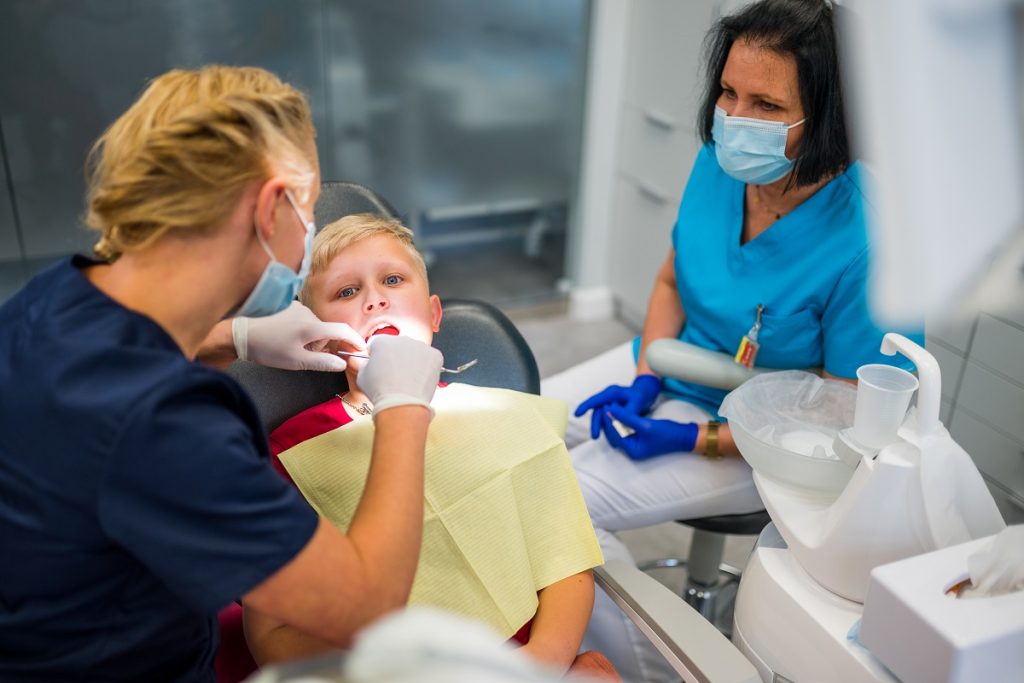
We often treat young patients in our dental office. We know that although they require a completely different approach than adults, taking care of the condition of milk teeth should be treated with equal commitment.
We also realize that parents have higher expectations from the dentist when it is their children who are sitting in the dental chair. The dentist conducting the treatment will ensure to clarify all doubts and answer the questions of both the young patient and the caregivers.
Pediatric dentistry and developmental dentistry is a dentistry specialty dealing with the prevention and treatment of dental and oral diseases in children and adolescents. Some aspects remain the same when it comes to deciduous and permanent teeth, but some procedures are modified accordingly. In addition, the age and level of skeletal development may limit the use of some solutions that are available for adults.
Pediatric dentists aim to prevent caries and gum disease, and conduct conservative treatment of younger patients, but also to cooperate with orthodontists or, if necessary, dental surgery specialists. Regular check-ups, hygienization procedures, and conservative treatment are just as important as the influence of the dentist on the formation of appropriate habits in young patients.
The pediatric dentist is a specific specialist. In addition to the fact that they must have the highest level of education, extensive experience, and be able to also conduct treatment in unusual cases, they should also have good contact with young patients.
In short, by visiting a dental office with a child, caregivers make sure that their children have fewer dental health problems at a later time. Prevention is better than cure, and if it is too late for prevention, it is worth starting treatment as soon as possible.
We take the oral health of young patients very seriously. We offer a full range of services that will take care of the health of permanent and deciduous teeth.
As a rule, the same dental procedures are carried out in the case of the youngest patients and the case of adults. Of course, the equipment used differs. You also need to take special care of the friendly atmosphere during the appointment, but, as a rule, the goals of dentists are the same: to provide the patient with the greatest comfort and to take care of the child’s oral health.
The list of indications for an appointment in the case of children does not differ much from the list of reasons that should also encourage adults to visit the dentist.
It is better to come to the dentist with your child and hear that everything is in order and they just need to get dental sealing, than to postpone the visit until the treatment of caries outbreaks requires a longer appointment.
We prepare a detailed cost estimate individually for every patient after the consultation with a doctor.
Our dental center employs great specialists in the field of pediatric dentistry. We encourage all parents to arrange an initial or subsequent appointment. We will conduct a full review, hygienization, and conservative treatment and refer the child to an orthodontist if necessary. We guarantee to maintain the same level of professionalism as we do with parents and an atmosphere that will suit young patients.
It is worth starting with a so-called ‘adaptive appointment’. No treatments causing possible discomfort are performed during such an appointment. We make sure that young patients feel as comfortable as possible. Certainly, the first visit, the second one at most, will allow them to get used to the dental office.
Usually, the first appointment is carried out after the first tooth has erupted. Sometimes an earlier appointment is necessary if, for example, there are some disease symptoms or prolonged problems with teething. It is certainly not worth delaying it for too long.
Milk teeth should be checked every 3 months, then the intervals between visits are slightly longer. It is always a good idea to discuss this with your dentist, as the time between visits will also depend on your child’s oral health.
Firstly, their diseases are as harmful to the child as diseases of permanent teeth and can also result in dangerous complications. In addition, permanent teeth can become infected with caries from deciduous teeth.
Usually between the ages of 5-6 and 13, but it is worth remembering that this is an individual matter and the numbers are not as regular as clockwork.
All complications that are associated with untreated caries can also affect the youngest patients. Caries from deciduous teeth easily spreads to permanent teeth and become more difficult to treat.
The key is brushing with the right technique, rinsing the mouth with boiled water, and regular preventive appointments. Do not use aggressive toothpaste, alcohol rinses, or medications that adults can sometimes use on their own accord without consulting the dentist.



HCentrum Stomatologiczne Jasińscy is a member of the prestigious organization, Leading Implants Centers, which brings together the best implant offices in Europe.